Project Goals.
Design & Build
Successfully design, test, build, and fly an RC aircraft.
Maximize Speed
Push for maximum aircraft speed while meeting all design constraints.
Team Collaboration
Improve team communication and coordination throughout development.
Engineering Application
Advance our understanding of aerospace engineering fundamentals.
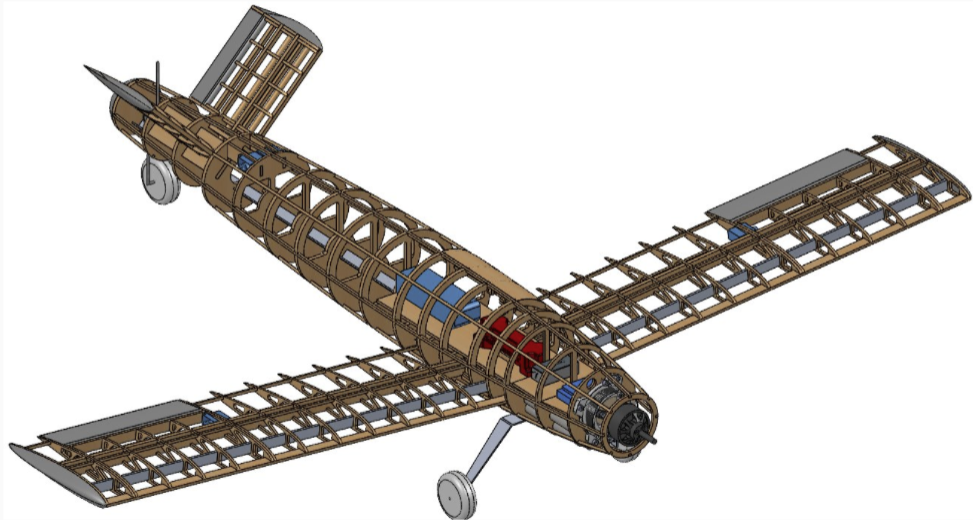
Aircraft Specifications.
Overall aircraft dimensions and configuration.
1,800 grams
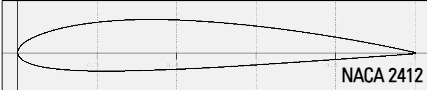
Airfoil Analysis - NACA 2412.
NACA 2412
- Chord length7 inches
- Airfoil thickness12%
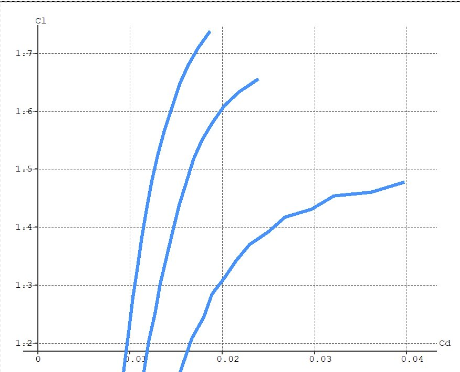
XFLR5 Analysis
The NACA 2412 airfoil was selected for its strong lift and low drag characteristics within the aircraft's operating range.
- Test speed 110 mph
- Test speed 230 mph
- Test speed 380 mph
The airfoil performed consistently throughout the tested speed ranges.
Wing Design & Analysis.
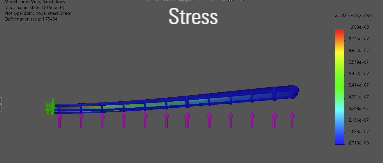
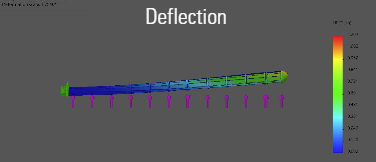
Wing Strength
- Design load50 N (2G)
- Wing supportAluminum spar
- YieldingNone under expected loads
- Factor of safety2.83
The wing was designed to withstand the expected loading conditions, with an aluminum spar providing additional structural support.
Wing Geometry
- Wing positionLow wing
- Dihedral angle5°
The 5 degree dihedral configuration was incorporated to contribute to roll stability and increased lift.
Fuselage Design.
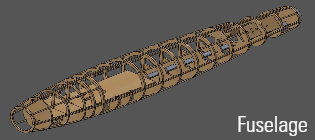
Material Selection
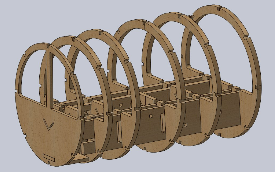
- Primary structureBalsa plywood
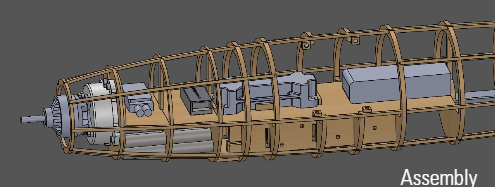
- Motor mountAluminum
- Additional components3D-printed PLA
Fuselage Configuration
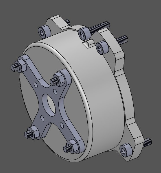
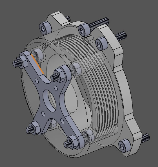
- Body geometryCircular fuselage
- Structural featureAluminum angle
- Weight distributionCounterweights for CG
- Propulsion supportMotor mount
Empennage - V-Tail.
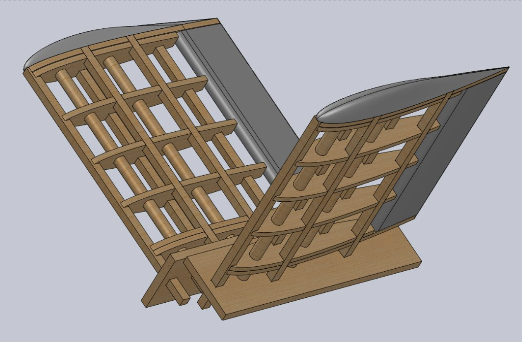
45° V-Tail
- Tail airfoilNACA 0012
- Length per stabilizer6 inches
- Chord5 inches
- Area per surface30 in²
- Total V-tail area60 in²
V-Tail Configuration
- Reduced aerodynamic drag
- Lower overall weight
- Combines pitch and yaw control
- Provides surface area for stability
Propulsion & Performance.
Power System
- PropellerAPC-E 9 x 7.5, 2-blade
- MotorCobra C-3510/16
- Motor KV1200
- Electronic speed controller40A ESC
- ESC connectors3.5 mm bullet plugs
- Battery2200 mAh, 11.1 V Li-Po
Aircraft Speed
- Unloaded speed65.2 mph
- Loaded speed65.2 mph
- Metric equivalent105 km/h
From Design to Flight.
Designed. Analyzed. Built. Flown.
Back to All Projects ↗